Area and Perimeter Explained
Area and Perimeter Are Different
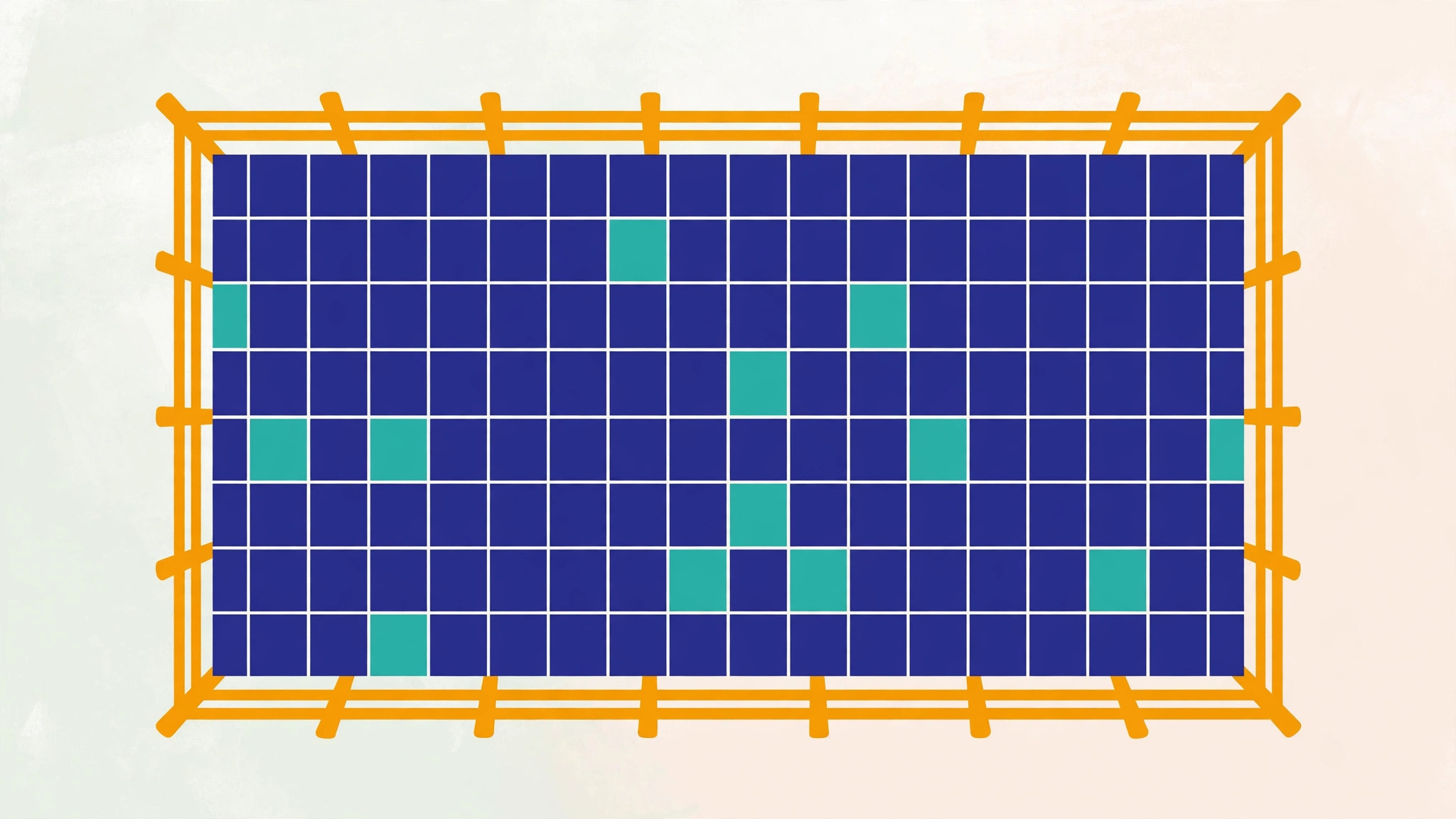
Area and perimeter describe two different things about a shape, and mixing them up is a common mistake. Perimeter is the total distance around the outside of a shape, found by adding the lengths of all its sides. It is measured in ordinary units such as centimetres or metres, because it is a length. Area is the amount of flat space inside a shape, measured in square units such as square centimetres. A fence around a garden needs the perimeter, while grass seed for the same garden needs the area. The two numbers can be very different for the same shape, so always ask first whether the question wants a length around the edge or the space inside it.
Perimeter of Rectangles and Triangles
To find a rectangle perimeter, add the length and the width and double the total. A rectangle 8 centimetres long and 5 centimetres wide has a perimeter of 2 times 13, which is 26 centimetres. For a triangle, simply add its three sides. A triangle with sides of 3, 4 and 5 centimetres has a perimeter of 12 centimetres. For a circle, the perimeter is called the circumference, and it equals pi times the diameter. A circle with a diameter of 10 centimetres has a circumference of about 31.42 centimetres. Notice that every perimeter is a single length, so the answer is never in square units. Label the units clearly, because a missing unit can make a correct number look wrong. Always add the sides in the same order as they appear around the shape, and write the running total after each side so a slip is easy to find.
Area of Rectangles and Triangles
The area of a rectangle is its length times its width. A rectangle 8 centimetres long and 5 centimetres wide covers 40 square centimetres. The area of a triangle is half the base times the height, where the height is the vertical distance from the base to the opposite corner. A triangle with a base of 10 centimetres and a height of 6 centimetres has an area of half of 60, which is 30 square centimetres. The area of a circle is pi times the radius squared, so a circle with radius 4 centimetres covers about 50.27 square centimetres. A useful check is to compare shapes: a shape that looks bigger should usually have the bigger area, so a much smaller answer deserves a second look.
Try it on your own numbers
The free calculator that goes with this guide:
Try the triangle calculator