Maths guides
Plain guides on the maths people actually search for, each with a worked example and its own original illustration. 50 guides are published so far.

How to Calculate a Percentage
Learn the simple three-step method for working out any percentage, with clear examples you can use every day.
Read the guide
Percentage Increase and Decrease Explained
See how to find a percentage increase or decrease, with the formula and worked examples for prices and pay.
Read the guide
How to Work Out a Discount
Work out sale prices fast with the discount formula, including 20 percent off and other common sale amounts.
Read the guide
How to Calculate VAT
Learn how to add VAT to a price and how to remove it, with the standard 20 percent rate worked out step by step.
Read the guide
How to Work Out a Tip
Find the right tip for a meal or a service, with quick methods for 10, 15 and 20 percent and a rounding trick.
Read the guide
Percentage of a Number: The Easy Method
Master the easiest way to find a percentage of any number, using 10 percent and 1 percent as building blocks.
Read the guide
How to Find the Original Price After a Discount
Reverse a discount to find the price before the sale, with a clear method and two worked examples to follow.
Read the guide
How to Calculate Percentage Change
Learn the percentage change formula for prices, pay and values, and see when to use increase or decrease.
Read the guide
How to Work Out Interest on Savings
Work out simple and compound interest on savings, and see how your money grows year by year.
Read the guide
How to Compare Unit Prices and Find the Best Deal
Compare unit prices to spot the real best deal, even when pack sizes and prices look very different.
Read the guide
How to Simplify Fractions
Learn how to simplify fractions step by step using the greatest common divisor and clear worked examples.
Read the guide
Adding and Subtracting Fractions
Learn how to add and subtract fractions with the same and different denominators using clear worked examples.
Read the guide
Multiplying and Dividing Fractions
Learn how to multiply and divide fractions correctly, including mixed numbers, with clear worked examples.
Read the guide
Fractions, Decimals and Percentages: How They Connect
See how fractions, decimals and percentages describe the same values and learn how to convert between them.
Read the guide
How to Convert a Fraction to a Decimal
Learn how to convert any fraction to a decimal by division, including terminating and repeating decimals.
Read the guide
What Is a Ratio?
Learn what a ratio is, how to read it, and how ratios describe the parts of a whole.
Read the guide
How to Simplify a Ratio
Learn how to simplify a ratio by dividing all parts by their greatest common divisor with worked examples.
Read the guide
How to Share an Amount by a Ratio
Learn how to split an amount by a ratio using total parts and the value of one part.
Read the guide
How to Work Out Proportions
Learn what a proportion is and how to solve proportion problems with the unitary method and cross multiplication.
Read the guide
Greatest Common Divisor and Lowest Common Multiple Explained
Learn what the GCD and LCM are, how to find them, and when to use each one.
Read the guide
What Is Algebra?
Algebra uses letters to stand for unknown or changing numbers, turning word problems into equations we can solve.
Read the guide
How to Solve a Linear Equation
A linear equation has one unknown raised to the power of one, and you solve it by doing the same thing to both sides.
Read the guide
How to Solve Quadratic Equations
A quadratic equation has x squared in it, and you can solve it by factorising, completing the square, or using the formula.
Read the guide
How to Factorise a Quadratic
Factorising a quadratic means writing it as two brackets multiplied together, which makes it easy to solve.
Read the guide
How to Rearrange a Formula
Rearranging a formula means changing its subject by doing the same inverse operation to both sides until the letter you want is alone.
Read the guide
Simultaneous Equations Explained
Simultaneous equations are two equations that must both be true at once, and you solve them by elimination or substitution.
Read the guide
What Is a Function in Maths?
A function is a rule that turns each input into exactly one output, shown as a table, formula, or graph.
Read the guide
How to Plot a Straight Line Graph
A straight line graph comes from a linear equation, plotted by finding points from a table of values.
Read the guide
Indices and Powers Explained
An index tells you how many times a number is multiplied by itself, and a few simple laws let you multiply, divide, and raise powers.
Read the guide
How to Solve Inequalities
An inequality compares two values with signs like less than or greater than, and you solve it much like an equation with one key twist.
Read the guide
Pythagoras Theorem Explained
Learn what Pythagoras theorem means, how the famous formula works, and how to use it on right-angled triangles.
Read the guide
How to Find the Area of a Circle
Find the area of any circle step by step using pi times the radius squared, with clear worked examples.
Read the guide
Area and Perimeter Explained
Understand the difference between area and perimeter, and learn how to calculate both for common shapes.
Read the guide
How to Work Out the Volume of a Cylinder
Work out the volume of a cylinder with pi times radius squared times height, explained with simple examples.
Read the guide
Angles in a Triangle Add Up to 180 Degrees
Learn why the three angles of any triangle always add up to 180 degrees, with examples to find missing angles.
Read the guide
What Is a Right-Angled Triangle?
Discover what makes a triangle right-angled, how to name its sides, and where these triangles appear in real life.
Read the guide
Sine, Cosine and Tangent Explained
Learn sine, cosine and tangent as simple ratios in a right-angled triangle, with worked examples using real numbers.
Read the guide
How to Find the Hypotenuse
Find the hypotenuse of any right-angled triangle using Pythagoras theorem, with step-by-step worked examples for beginners.
Read the guide
How to Work Out the Area of a Triangle
Calculate the area of any triangle using half the base times the height, with clear examples for each case.
Read the guide
Circles: Circumference and Area
Master circles with both key formulas: circumference from pi times diameter, and area from pi times radius squared.
Read the guide
How to Work Out an Average
Learn how to work out an average step by step with clear examples for test scores, prices and everyday numbers.
Read the guide
Mean, Median and Mode Explained
Understand mean, median and mode with simple definitions and examples that show when each one is most useful.
Read the guide
How to Read a Bar Chart
Learn how to read a bar chart, compare values, spot patterns and answer questions from the information it shows.
Read the guide
What Is Probability?
Discover what probability means, how it is measured from zero to one, and why some events are more likely than others.
Read the guide
How to Work Out Probability
Learn the simple probability formula and use it to work out chances with coins, dice, cards and everyday choices.
Read the guide
Mental Maths Tricks That Actually Work
Speed up your mental maths with simple tricks for adding, subtracting, doubling and checking answers without a calculator.
Read the guide
How to Multiply Quickly in Your Head
Learn quick ways to multiply in your head using breaking apart, rounding and doubling so large calculations feel easier.
Read the guide
How to Estimate an Answer Before You Calculate
Learn how to estimate an answer before you calculate so you can spot mistakes and check that results look sensible.
Read the guide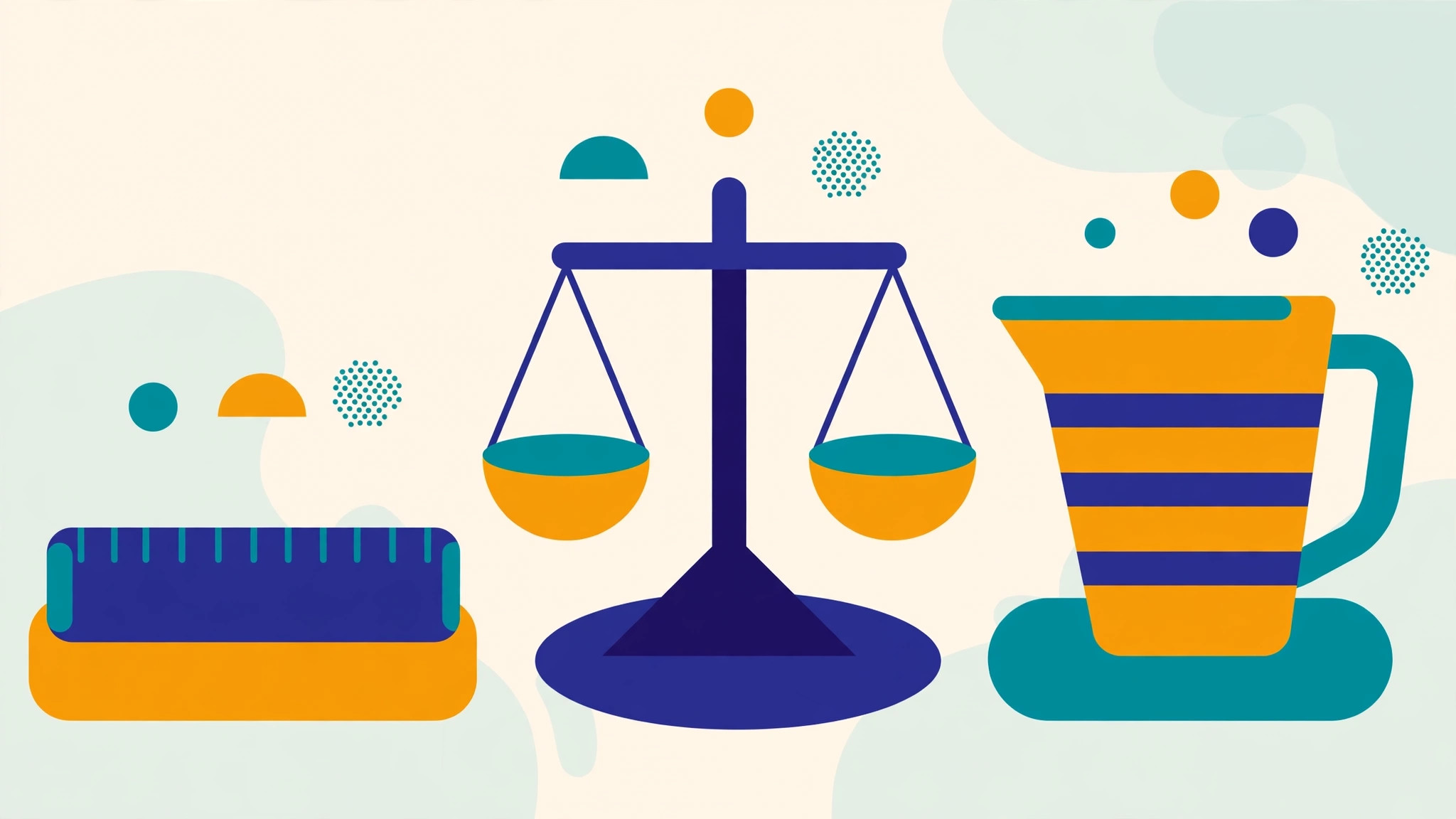
How to Convert Units: Length, Weight and Volume
Learn how to convert units for length, weight and volume with simple rules, tables and worked examples you can follow.
Read the guide
How to Work Out Speed, Distance and Time
Learn the speed, distance and time triangle and use it to work out how fast, how far and how long with real examples.
Read the guide