What Is Algebra?
What Algebra Means
Algebra is the part of maths that uses letters to stand for numbers we do not know yet, or numbers that can change. Instead of working only with fixed numbers such as 4 and 7, algebra lets us write general rules that work for many values at once. For example, the rule for the perimeter of a square can be written as 4s, where s is the length of one side. Once we know the value of s, we can find the perimeter at once. Algebra turns word problems into short equations that we can solve step by step. It is the language that connects arithmetic to geometry, science, and everyday problem solving, and it gives us a clear way to describe patterns that numbers alone cannot show.
Letters Stand for Numbers
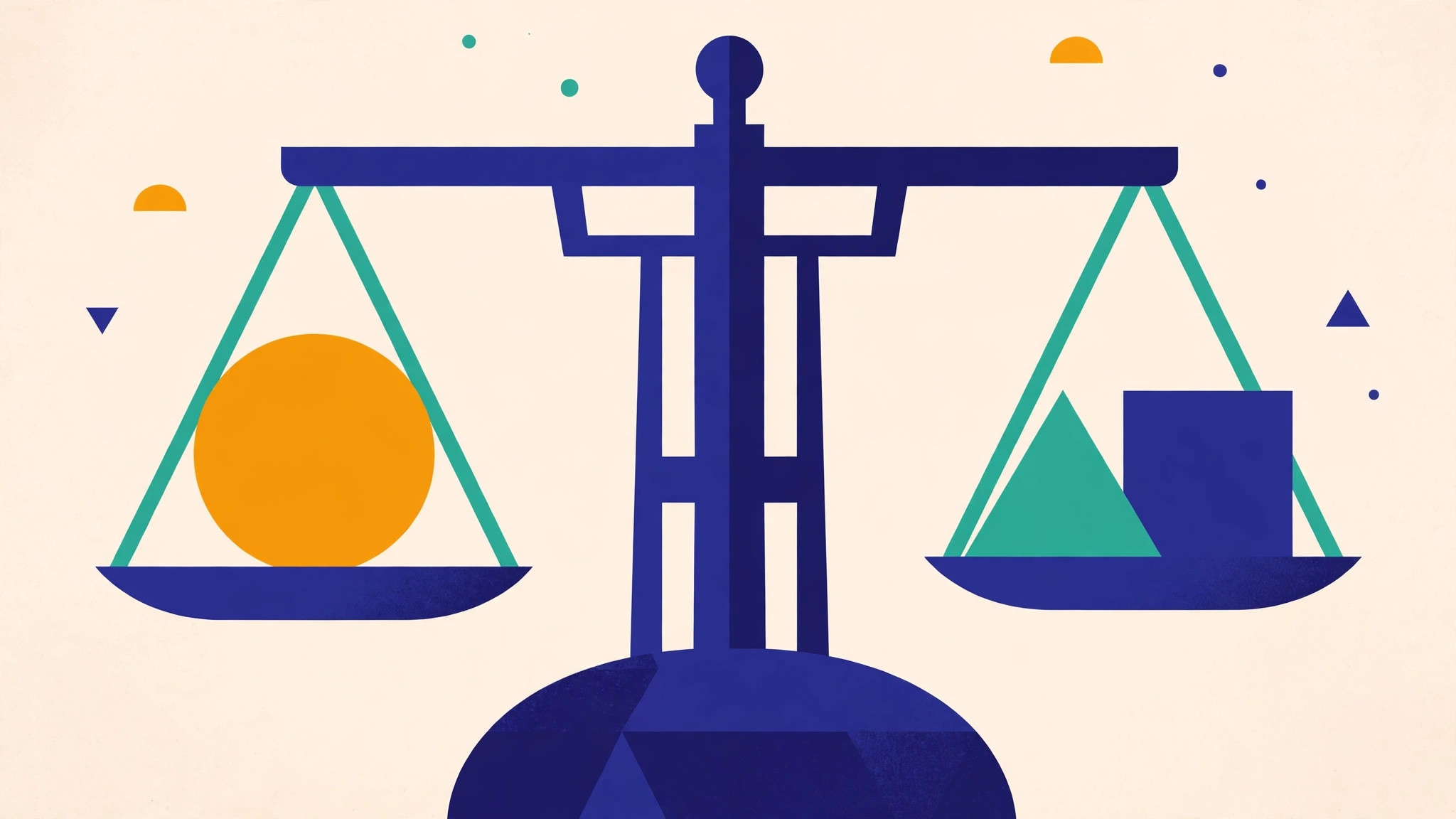
In algebra, a letter such as x or y is called a variable because its value can vary. A number written in front of a letter is called a coefficient, so in 3x the coefficient is 3 and the variable is x. When we write 3x, we mean 3 times x. If x is 5, then 3x is 15, and if x is 10, then 3x is 30. A term is a single number, a single letter, or a number and letter multiplied together, such as 4, y, or 7a. An expression joins terms with plus or minus signs, for example 2x plus 5. An equation is different because it has an equals sign, such as 2x plus 5 equals 13, and it states that the two sides balance exactly.
Why Algebra Matters
Algebra matters because it lets us solve problems where the answer is not obvious at first glance. Suppose a taxi charges 3 pounds plus 2 pounds per mile, and the total fare is 13 pounds. Writing this as 2m plus 3 equals 13 lets us work out that m equals 5, so the trip was 5 miles. The same skill helps in science, where formulas link speed, distance, and time, and in finance, where interest and savings grow over time. Algebra also trains clear thinking: each step follows a rule, and we can check the answer by putting it back into the original equation. Once the basics feel natural, harder topics such as graphs, quadratics, and simultaneous equations become much easier to learn.